TL;DR
- DOJ requests a new trial against Tornado Cash co-founder Roman Storm after a hung jury on the two most serious charges
- In August 2025, Storm was only convicted for operating an illegal money transmitting business — not for money laundering or sanctions violations
- A new trial is scheduled for October 2026 and could potentially give Storm up to 40 years in prison
- The case is seen as one of the most important legal tests for developer responsibility in the DeFi sector
DOJ Pushes for New Round
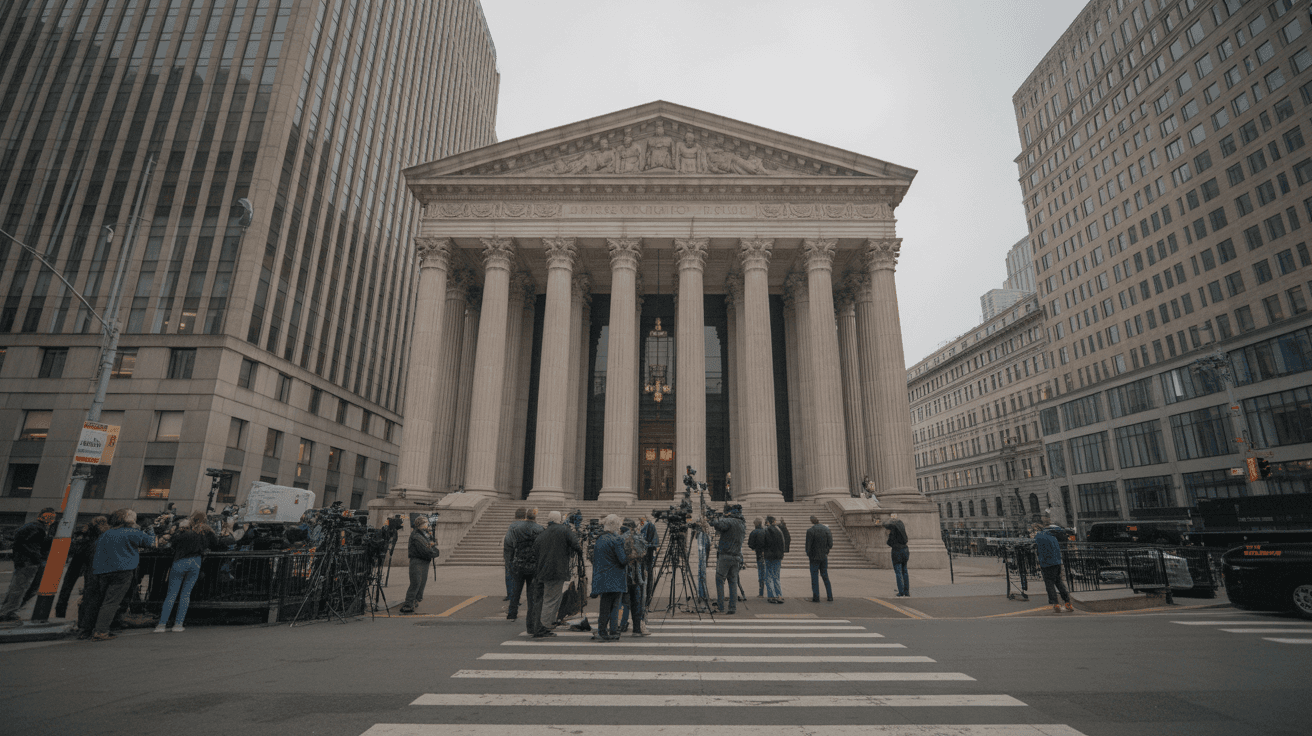
The U.S. Department of Justice has formally requested a new trial against Roman Storm, co-founder of the crypto mixer service Tornado Cash. According to DL News, the goal is to retry the two charges on which the jury in August 2025 failed to agree — namely, conspiracy to commit money laundering and conspiracy to violate the International Emergency Economic Powers Act (IEEPA).
The case has attracted significant attention in the international crypto community, and its outcome will likely set important precedents for the legal risk software developers in the DeFi sector actually bear.

Background: Indictment and Partial Verdict
Storm was originally indicted in August 2023 on three counts: operating an illegal money transmitting business, conspiracy to commit money laundering, and sanctions violations. The DOJ alleged that Tornado Cash — the service Storm and co-founder Roman Semenov (still at large) built — had been used to launder over one billion dollars, including hundreds of millions of dollars for the North Korean hacking group Lazarus Group.
In August 2025, the jury delivered a mixed verdict: Storm was found guilty of operating an unregistered money transmitting service, but the jury was completely deadlocked on the two remaining and far more serious charges. It is precisely these that the DOJ now wishes to retry.

Defense's Core Arguments
Storm's defense has consistently argued that he is a software developer whose sole purpose was to build tools for financial privacy for legitimate users. Three arguments have been central:
No Control Over Funds: The defense emphasizes that Tornado Cash's smart contracts are immutable and autonomous. Once the protocol was launched, neither Storm nor the other founders had any ability to intervene in transactions or prevent misuse. The Blockchain Association supported this view in an amicus brief.
Open Source as Free Speech: The defense argues that the DOJ is in reality attempting to criminalize coding, and that this violates the First Amendment. The organization Coin Center has pointed out in an amicus brief that open-source developers cannot control how others use their tools.
Not a Money Transmitting Service: According to the defense, users had full independent control over their own funds, and the protocol did not charge for transferring money — which, according to FinCEN's own guidelines, could exempt it from registration as a Money Services Business.
DOJ's Counterarguments
The DOJ rejects the control argument and claims that Storm and Semenov actively operated and marketed the service, and profited from it through the TORN governance token and the maintenance of the relayer algorithm. The prosecution compares the protocol to a frying pan that transfers heat — the transfer itself occurs regardless of who controls what.
The DOJ further claims that Storm was aware that the Lazarus Group used the service, and that he — despite public assurances of sanctions compliance — deliberately looked the other way.
Broader Implications for DeFi Developers
The case against Storm is not an isolated case. Samourai Wallet co-founders Keonne Rodriguez and William Lonergan Hill are also indicted in what many in the crypto community describe as a systematic offensive against developers of privacy technology.
On the other hand, a ruling from the Court of Appeals for the Second Circuit in February 2025 — in a case related to Uniswap Labs — signaled that developers of decentralized exchanges are generally not responsible for fraud committed by third parties on the platform. The presiding judge in that case, Katherine Polk Failla, is also the presiding judge in the Storm case, which makes her potential legal assessments particularly interesting to follow.
Legal experts quoted after the partial verdict in 2025 point out that it sent a clear signal that crypto developers cannot take immunity from traditional financial regulation for granted — even if the hung jury suggests that deep disagreement still exists about who should actually be held responsible in the digital asset space.