TL;DR
- Poland's Prime Minister Donald Tusk accused crypto exchange Zondacrypto on April 17, 2026, of ties to the Russian mafia and intelligence services
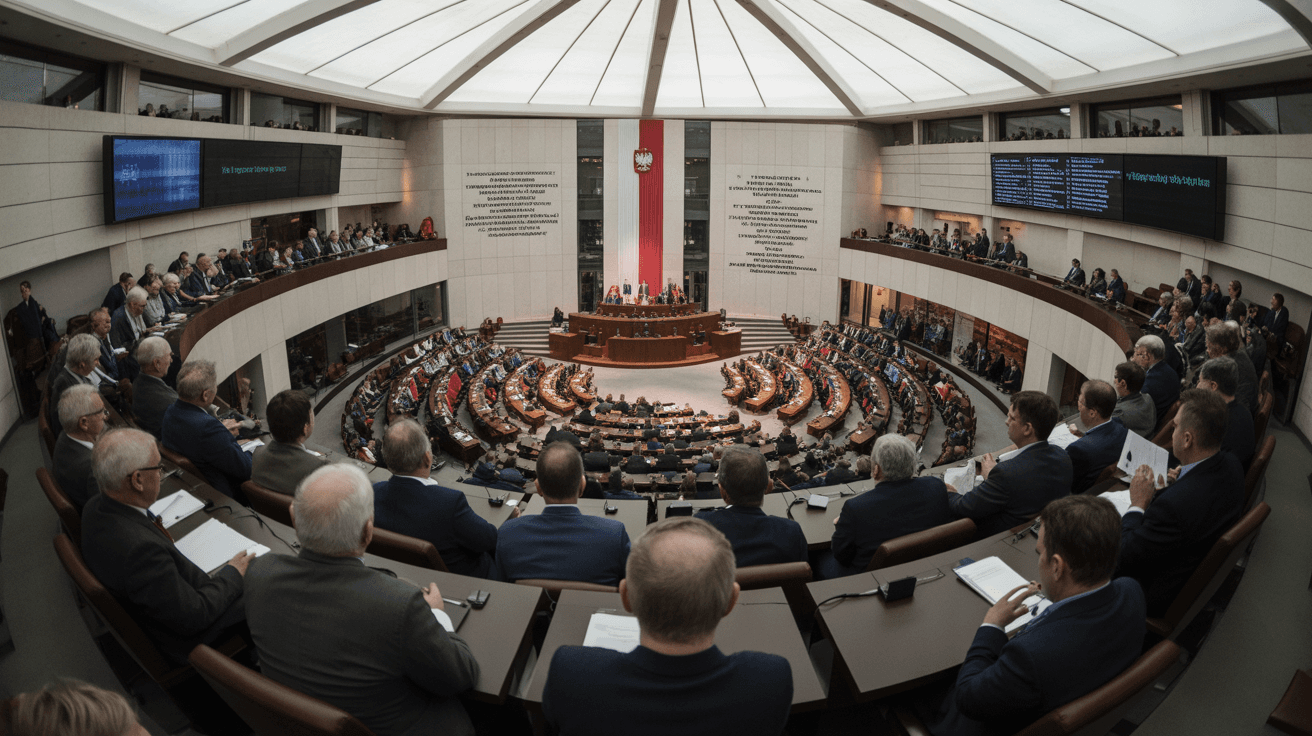
- The accusations came during a parliamentary debate on overriding President Nawrocki's veto against crypto regulation
- The attempt to override the veto failed: 243 voted in favor, but 263 votes were required
- Poland is now the only EU country that has not implemented MiCA, risking serious consequences by July 1, 2026
Dramatic Accusations in Parliament
During a parliamentary debate in Warsaw on April 17, 2026, Poland's Prime Minister Donald Tusk leveled strong accusations against the crypto exchange Zondacrypto. According to The Block, Tusk claimed that the company has connections to the Russian mafia and Russian intelligence services, and that it actively lobbied against the government's attempts to introduce crypto regulation. He went so far as to suggest that some Polish politicians had deliberately blocked the legislation on behalf of this company.
The accusations have not yet been independently verified, and Zondacrypto has not publicly responded to the claims at the time of publication. 24Krypto clarifies that these are political statements made in a context close to an election campaign, and should be treated with source-critical caution.
Tusk suggested that individual politicians had blocked crypto regulation on behalf of a company with Russian underworld connections — a dramatic accusation amidst a regulatory conflict that has been ongoing for months.

The Veto Battle That Failed to Gain a Majority
The background to the debate was Poland's repeated attempts to pass national crypto legislation in line with the EU's MiCA regulation. President Karol Nawrocki vetoed the first bill (bill 1424) in December 2025, and an almost identical proposal (bill 2064) in February 2026.
When the lower house of parliament attempted to override the latest veto on April 17, 243 representatives voted in favor of the bill — but 263 votes are required under the Polish constitution to override a presidential veto. With only 191 representatives supporting the veto and three abstaining, the initiative fell short.

The President's Rationale
Nawrocki has repeatedly justified his veto by stating that the bill was too complex and intrusive. He argued, among other things, that administrative authorities' ability to block domain names belonging to crypto firms constituted a disproportionate threat to business freedom and users' access to their own funds.
The president also warned that high supervisory fees would favor large banks at the expense of startups, and that the law's scope of over 100 pages would push Polish companies to establish themselves in other EU countries with simpler regulations — such as the Czech Republic, Lithuania, or Malta. Finance Minister Andrzej Domański countered by warning that the absence of regulation creates an "El Dorado for fraudsters" and weakens investor protection.
Poland Alone Among EU Countries
The consequences of the persistent political deadlock are significant. Poland is currently the only EU country that has not yet implemented MiCA, despite the EU's comprehensive framework for crypto-assets having fully entered into force on December 30, 2024.
A critical deadline is approaching: by July 1, 2026, Poland must designate a competent supervisory authority for the crypto market. Without this, Polish crypto exchanges can neither start the licensing process nor operate legally after this date, according to Deputy Finance Minister Jurand Drop. Foreign players such as Coinbase have already established themselves in Poland using MiCA licenses issued in Luxembourg.
What Happens Next?
With the failed override attempt and a sharp political conflict between the government and the president — who, incidentally, is affiliated with the national-conservative opposition — the prospects for a quick solution are uncertain. Kanga Exchange CEO Sławek Zawadzki stated, according to Research, that the company has already prepared for the scenario of alternative jurisdictions, illustrating that parts of the industry are no longer waiting for Warsaw to sort things out.
The political accusations against Zondacrypto add further pressure to an already tense situation, making it more difficult to find a compromise that can gain the necessary parliamentary support before the summer deadline.