TL;DR
- A federal court in Manhattan dismissed the lawsuit against Uniswap Labs "with prejudice" on March 2, 2026 — meaning the plaintiffs cannot refile the case.
- The plaintiffs claimed Uniswap had facilitated fraud involving 38 different "scam tokens" between 2021 and 2022.
- Judge Katherine Polk Failla ruled that offering a neutral, decentralized platform is not the same as actively aiding fraud.
- The UNI token rose approximately 6 percent following the news.
Four Years in Court — The Case is Finally Decided
A group of investors led by Nessa Risley sued Uniswap Labs in April 2022. They claimed that the platform had enabled scammers to conduct so-called rug pulls and pump-and-dump schemes, and that Uniswap had thus acted as an unregistered securities exchange in violation of state consumer protection laws. The investors sought damages for losses related to trading 38 different tokens they described as fraudulent.
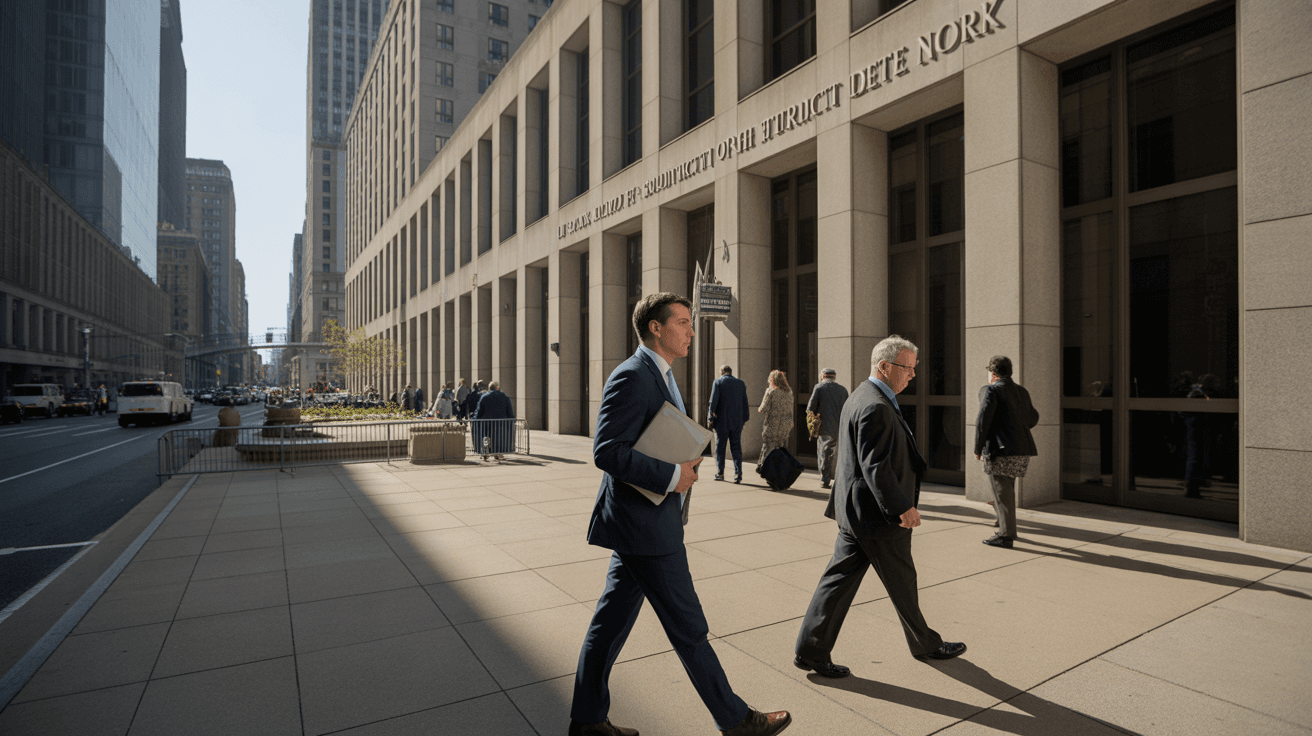
However, Judge Katherine Polk Failla of the U.S. District Court for the Southern District of New York did not rule in favor of the plaintiffs — and the dismissal is now final. The term "with prejudice" practically means that the same claims can never be brought before the court again.
"It defies all logic to hold an open-source developer liable for a third party's misuse of a decentralized platform." — Judge Katherine Polk Failla

The Core of the Ruling: Neutral Tools Are Not the Same as Complicity
Failla drew a clear line between providing infrastructure and actively assisting criminals. In her reasoning, she compared Uniswap to a bank that is not responsible for money laundering simply because it offers payment services — or to a messaging app that is not liable for illegal actions coordinated via its platform. The court found neither that Uniswap had knowledge of the fraud nor that the company had provided substantial assistance in its execution, according to the research material underlying this article.
Uniswap founder Hayden Adams commented on the ruling on X, describing the outcome as a new legal precedent: open-source developers are not responsible for scammers exploiting their code — the scammers themselves are liable. The company's legal director Brian Nistler called the decision an important principled breakthrough for the DeFi industry.

What Does This Mean for DeFi Going Forward?
The decision is widely interpreted as a victory not only for Uniswap but for decentralized finance as a concept. It provides developers of open protocols with clearer legal backing: building a permissionless trading system does not, in itself, make you responsible for what third parties do there.
The ruling also comes as the SEC withdrew its so-called Wells Notice against Uniswap Labs in 2025 — further reducing regulatory pressure on the company. According to the research material, the decision could also weaken the SEC's arguments in related crypto cases.
Not a Blank Check — Warnings from Experts
Experts are quick to clarify, however, that the ruling does not grant DeFi platforms general immunity. The degree of decentralization is crucial: if developers retain governance rights or collect fees in a way that suggests control over the platform, they could still be held liable depending on the circumstances, according to the research material.
The U.S. Commodity Futures Trading Commission (CFTC) has also recently fined other DeFi actors such as Opyn, Deridex, and ZeroEx. Roman Storm, co-founder of the crypto mixer Tornado Cash, was found guilty in August 2025 of operating an unlicensed money transmitting business — an example that individual criminal liability remains very real where criminal intent can be proven.
For ordinary users, the message is clear: responsibility for losses due to rug pulls rests with the scammers — not with the underlying infrastructure. This means investors must make their own assessments of which tokens they expose themselves to.
Source material: Bitcoinist and internal research on DeFi liability and legal developments surrounding the Uniswap lawsuit.