TL;DR — What's Happening Now
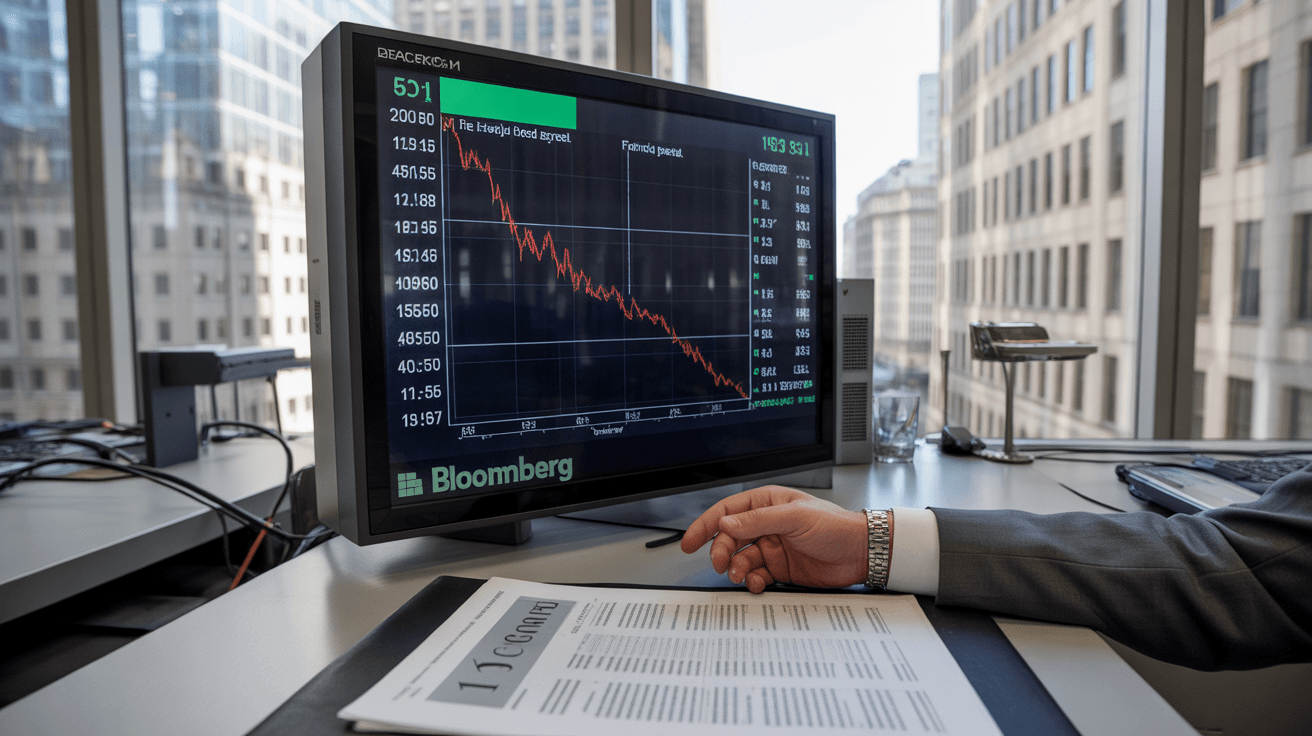
- Bitcoin trades at $74,708 — the market is in full risk-off mode with the Fear & Greed index at 12/100 (Extreme Fear)
- Investors attempted to withdraw ~$13 billion from over a dozen private credit funds in Q1 2026 — only two-thirds were available
- BlackRock's HPS Corporate Lending Fund ($26 bn AUM) limited withdrawals to 5% of NAV after requests reached 9.3% ($1.2 bn)
- Barings Private Credit Corp. introduced a similar 5%-cap after investors attempted to redeem 11.3% of shares in Q1
- Over $4.6 billion in investor capital is now locked in private credit structures that cannot meet demand
What's Driving the Movement
It's not a single catalyst pushing Bitcoin down — it's a regime shift. The private credit market, long seen as a stable alternative to traditional bonds, is now in an acute structural crisis sending shockwaves into broader liquidity markets.
The Private Credit Crisis as a Macro Risk
The core problem is well-known to anyone who has followed alternative asset management: a fundamental mismatch between the maturity of the underlying loans and the quarterly withdrawal functions funds offer investors. Kaush Amin, Head of Private Market Investments at U.S. Bank Asset Management Group, describes it directly: the mismatch between loan terms and redemption structures is the primary issue.
When BlackRock, Apollo Global Management, and Ares Management all introduce withdrawal restrictions within the same quarter, it's no longer about isolated incidents. According to research compiled by 24Krypto, institutional investors are now sitting on over $4.6 billion in blocked capital after funds across the industry only managed to meet two-thirds of Q1 requests.
Bitcoin as a 24/7 Pressure Valve
This is directly relevant to crypto liquidity. When traditional capital gets locked up, it's digital assets — and Bitcoin specifically — that become the available liquidation alternative for players who need cash. As the research material points out: "Bitcoin functions as a 24/7 pressure valve in a market where private credit admits that redemptions cannot be cleared."
It's not just a theoretical mechanism. In a risk-off regime where DXY strengthens and the S&P 500 is under pressure, the crypto market is the first place institutions sell. The reason is simple: it's one of the few markets that is always open and always has liquidity — albeit at a price.
Macro Backdrop
The Fear & Greed index at 12/100 doesn't just reflect crypto sentiment — it's a symptom of a broader risk environment. Investors in private credit funds are driven by three factors according to sector research: lack of transparency in valuation models, concerns about AI-disruptive effects on software lending (a segment with significant private credit exposure), and a general re-evaluation of alternative capital after years of free money.
Jamie Dimon's earlier warning about «cockroaches» — that one collapse reveals more beneath the surface — is now circulating again in institutional discussions about the private credit sector.
Altcoin Overview
In a market with Fear & Greed at 12/100, the altcoin picture is predictably brutal. Risk-adjusted players are exiting exposure across the entire risk curve.
- Ethereum (ETH): Underperforms relative to BTC in risk-off regimes — beta against Bitcoin is historically high, amplifying the decline
- DeFi tokens: Ironically, this is the segment that researchers point to as a potential long-term winner. Tokenized private credit and on-chain lending protocols (Aave, MakerDAO) are attracting increased interest as a more transparent and liquid alternative to traditional BDC structures (Business Development Companies). As one source puts it: "The door is closing in TradFi. In DeFi, it's about to open."
- BTC Dominance: Expected to remain high or rise further in this regime — Bitcoin is still the preferred «safe haven» alternative within crypto
No altcoins stand out positively in the current regime. Focus should be on capital preservation, not rotation.

Technical Picture
Bitcoin at $74,708 is in technical no-man's-land after weeks of selling pressure. The volume profile shows thin support between $72,000–$74,000, meaning a break below this level could accelerate quickly.
Support and Resistance:
- Primary support: $72,000 (volume profile gap)
- Secondary support: $68,500–$69,000 (previous consolidation)
- Stronger structural support: $65,000 (200-day moving average, depending on calculation period)
- Resistance: $78,000–$80,000 (previous peak zone)
RSI: On the daily timeframe, RSI is approaching oversold territory under 30 — historically a possible reversal signal, but in strong downtrends, RSI can remain oversold for a long time
MACD: Bearish crossover on the daily chart is a negative signal. No divergence suggesting immediate reversal.
Funding rates: In a risk-off regime with Fear & Greed at 12, funding rates on perpetuals are probably negative or close to zero — reflecting that short sellers dominate the market.
Open interest: Decreasing open interest combined with falling price is typically a sign of capitulation rather than short-build-up — which paradoxically can indicate that the bottom is closer than it seems.
"Bitcoin is a 24/7 pressure valve — it's the last market to close, and the first institutional players sell when traditional liquidity disappears."
What to Watch For
Macro Events:
- FOMC minutes and any Fed comments in the coming weeks are critical — any hint of pivoting will have a disproportionately large effect in a market with extreme fear
- Q2 private credit reporting: The next quarterly cycle for private credit funds will reveal whether withdrawal pressure continues or subsides. If the $20 billion exit wave fully materializes, pressure on liquid markets will increase
- BDC reports from Apollo, Ares, Blackstone, and BlackRock: Any change in NAV valuation or further withdrawal restrictions will act as negative catalysts for risk sentiment
Crypto-Specific Levels:
- $72,000: Critical short-term support — watch the daily close
- $80,000: First meaningful resistance — a return here will require a change in the macro environment
- Tokenized private credit on DeFi protocols: Volume and TVL (Total Value Locked) in this segment are an indicator of whether institutional capital is actually rotating from TradFi to on-chain alternatives
- Fear & Greed below 10: Historical extremes below 10 have been short-term counter-indicator signals — but they require a catalyst for reversal
Structural Risk to Price In:
Private credit market manages an estimated $1.7 trillion globally (estimate based on industry figures). Even a marginal forced liquidation in this universe can represent significant amounts relative to Bitcoin's daily trading volume. This is not a risk that is priced in a day — it is a risk that builds up over quarters.