# How to Buy Cryptocurrency in Norway: Complete Step-by-Step Guide (2025)
![Hero image]
What you need before you start
Before you can buy a single satoshi, you need three things in place: BankID, a Norwegian bank account, and valid identification. This is not bureaucratic harassment – it's the Anti-Money Laundering Act (AML) and "Know Your Customer" (KYC) rules that apply to all regulated financial platforms in Norway.
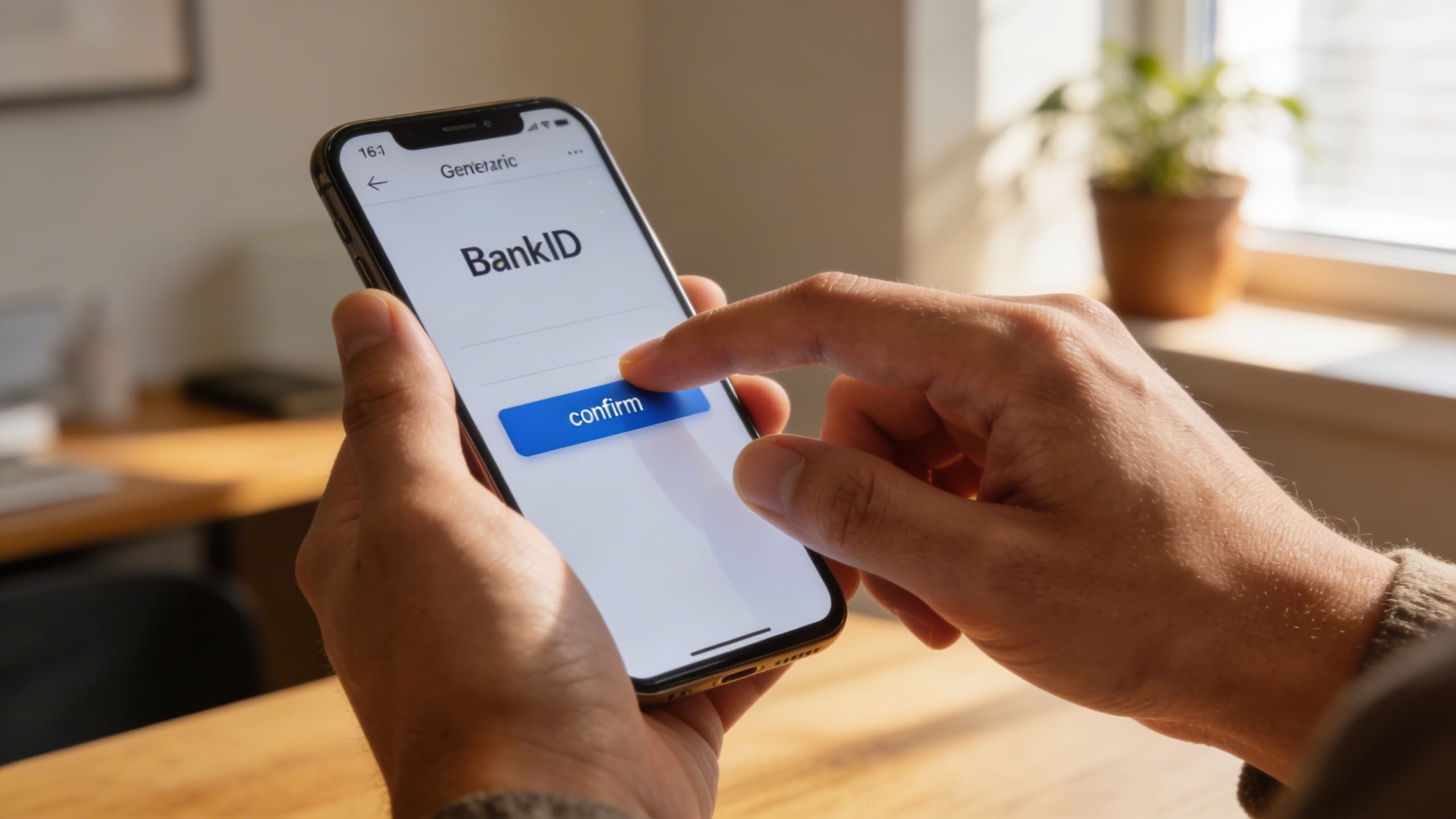
BankID and KYC – how verification works
All reputable crypto exchanges are required to verify your identity. The process is called KYC and typically involves:
On Firi and NBX, the entire process goes through BankID and takes less than five minutes. On Coinbase and Kraken, you upload images of your passport or national ID card, and approval takes from a few minutes to one day.
A platform that allows you to buy crypto without KYC is either illegal or a red flag you should steer clear of.
Norwegian Crypto Exchanges: Firi and NBX
Firi – the easiest for beginners
Firi (formerly MiraiEx) is Norway's largest crypto exchange by number of users and is registered with the Financial Supervisory Authority of Norway as a virtual currency service provider. The platform is designed for people who have never bought crypto before.
Registration on Firi:
Firi Fee Structure:
- Trading fee: 0.7% per trade (market order)
- Deposit via bank: free
- Withdrawal to Norwegian bank account: 0 kr
- Withdrawal of crypto to external wallet: varies per coin (e.g., BTC approx. 0.0002 BTC)
Firi offers BTC, ETH, ADA, SOL and a handful of other established cryptocurrencies. The selection is deliberately limited to protect beginners from speculative shitcoins.
NBX – Norwegian Block Exchange
NBX is the other major Norwegian player and is regulated in the same way as Firi. NBX stands out with a slightly wider selection and the ability to trade in a more traditional exchange interface with an order book.
NBX Fee Structure:
- Maker fee: 0.5%
- Taker fee: 0.5%
- Deposit via bank: free
- Card purchase: available via third-party solution (higher fee)
Both Norwegian exchanges support Norwegian customer service, which is invaluable if something goes wrong.
International Exchanges Available from Norway
Coinbase – best for international beginners
Coinbase is listed on Nasdaq and is one of the world's most regulated crypto exchanges. For Norwegians, Coinbase is a good alternative if you want access to a wider selection or want to use Coinbase Wallet directly.
- Trading fee: 0.6% (taker) via advanced trading. Simple purchase via the app costs up to 1.49% + spread.
- Payment methods: SEPA transfer (free), debit card (1.49%)
- Strengths: User-friendly app, broad coin list, Coinbase Earn to learn about new coins
Kraken – for the slightly more advanced
Kraken is known for solid security, low fees for larger volumes, and a wide selection of over 300 cryptocurrencies. The interface is a bit more complex, but Kraken also offers a simplified "Instant Buy" function.
- Trading fee: From 0.16% (maker) to 0.26% (taker) via Pro
- Payment methods: SEPA transfer (free), SWIFT
- Strengths: Low fees for volume, staking services, strong security profile
Binance – largest, but with reservations
Binance is the world's largest crypto exchange by volume and offers the lowest base fee (0.1%). However, Binance has had issues with European regulators and operates without an EU/EEA license in many countries. Norwegian users can, in principle, use Binance but should be aware of the increased regulatory risk and limited Norwegian customer support.
The purchase process step by step – from zero to BTC
We use Firi as an example since it is the easiest path for Norwegian beginners.
Step 1: Create an account
Go to firi.com. Click "Create account", fill in email and password. Check your email and click the confirmation link.
Step 2: Verify identity
Click "Verify" in the dashboard. You will be sent to the BankID solution. The entire process takes less than five minutes.
Step 3: Deposit funds
Go to "Deposit" and select "Norwegian kroner (NOK)". You will see an account number and a KID code. Transfer the desired amount from your online bank. Funds typically arrive within one business day, often faster with instant transfer.
Step 4: Buy cryptocurrency
Go to "Buy/Sell". Select, for example, Bitcoin (BTC). Enter the amount in NOK you want to spend. You will immediately see what you get and what the fee is. Click "Buy". Done.
Step 5: Confirm that the holding is registered
Go to "Portfolio". Your BTC holding should now be displayed with its current value.
![Midpoint image]
Payment methods: What does it cost to deposit funds?
Bank transfer is clearly the cheapest and is recommended for amounts over 500 kr. Funds take 0–2 business days to arrive.
Vipps is available on Firi and is fast and easy, but always check if there is a fee for the transfer from your Vipps balance.
Debit or credit cards provide immediate purchasing power but cost significantly more. Not only does the exchange charge a fee – Norwegian banks can also categorize crypto purchases as cash withdrawals, which triggers interest costs on credit cards.
What does it really cost? Spread, fee, and withdrawal fee explained
Many beginners only focus on the visible trading fee. But it is the spread – the difference between the buy and sell price – that is often the largest cost.
Example:
- Bitcoin trades at 950,000 NOK on the market
- Firi shows a buy price of 956,500 NOK (0.7% above)
- You buy for 10,000 NOK and thus pay approx. 70 kr in spread
- In addition, there may be a visible trading fee
Actual total cost = spread + trading fee + any deposit fees + withdrawal fees
For a long-term investor who buys once a month and sends to their own wallet, the total cost is typically 1–1.5% per transaction – which is acceptable.
Sending crypto to your own wallet vs. leaving it on the exchange
One of the most important decisions you make as a crypto owner is: should the crypto stay on the exchange, or be moved to your own wallet?
Leave it on the exchange:
- Easiest for active traders
- Risk: The exchange can be hacked, go bankrupt, or freeze withdrawals
- Remember: "Not your keys, not your coins"
Own software wallet (e.g., Exodus, MetaMask):
- You control private keys
- Free to create
- Suitable for medium amounts
Hardware wallet (e.g., Ledger Nano X, Trezor Model T):
- Best security – private keys are never connected to the internet
- Costs 800–2000 kr
- Recommended for amounts over 10,000–15,000 kr
A hardware wallet is the crypto equivalent of a safe deposit box – impractical to open every day, but invaluable for what truly matters.
DCA – Dollar Cost Averaging: Automatic crypto saving
DCA (Dollar Cost Averaging) means you buy a fixed amount at a fixed time – regardless of price. Instead of trying to time the market, you average out the purchase price over time.
Example:
You buy 500 kr worth of BTC every Monday.
- Week 1: BTC costs 900,000 kr → you get 0.000556 BTC
- Week 2: BTC costs 1,000,000 kr → you get 0.0005 BTC
- Week 3: BTC costs 850,000 kr → you get 0.000588 BTC
The average purchase price will be lower than if you had bought everything at the peak.
Firi supports automatic recurring purchases directly in the app. It is the simplest form of crypto saving and is highly recommended for beginners.
Limit order vs. Market order – simply explained
Market order: You buy immediately at the current market price. Fast and simple, but you don't know the exact price in volatile markets.
Limit order: You set a price you are willing to buy at. The order is only executed if the market reaches that price. You have full control, but the order may never be filled.
Rule of thumb: Use market orders for daily purchases and DCA. Use limit orders when you have a specific price in mind and are not in a hurry.
Tax implications – what you need to know from day one
In Norway, cryptocurrency is treated as an asset, not currency. This means:
- Buying itself is not tax-triggering – but you must register the purchase date and purchase price (cost basis) for each purchase
- Gain on sale is taxable at 22% capital gains tax
- Loss on sale is deductible at the same rate
- Crypto assets must be declared in the tax return (currently at 80% of market value as of January 1st)
- Staking rewards are considered taxable income when received
Important: Log all transactions from day one. Feel free to use a tool like Koinly (supports Norwegian tax report) or Cointracking for to import transaction history from the exchanges.
The Norwegian Tax Administration has information about crypto on its website and has, since 2023, received reporting data directly from Norwegian exchanges.
Red flags: How to recognize unreliable platforms
Unfortunately, the crypto world attracts scammers. Here are the most important warning signs:
- Guaranteed returns: No reputable player guarantees 10%, 20%, or "risk-free" returns
- Lack of registration with the Financial Supervisory Authority: Check the Financial Supervisory Authority's register before depositing funds
- Pressures you to trade quickly: "This offer is gone in 24 hours" is manipulation
- Unknown or anonymous management: Reputable exchanges have publicly available team info
- Problems with withdrawals: If you cannot withdraw your money, it is a scam
- Celebrity backing on social media: Often fake ads – always verify directly on the platform's official website
Tips for beginners: How to start safely
![Closing image]
Frequently Asked Questions
Can I buy crypto without BankID?
On Norwegian exchanges like Firi and NBX, BankID is standard for verification and makes the process very fast. On international exchanges like Coinbase and Kraken, you can use a passport or national ID card instead, but the process takes longer.
What is the minimum amount to buy crypto in Norway?
On Firi, you can buy for as little as 99 NOK. On Coinbase, the minimum order is typically around 2 USD. There's no reason to start with large amounts – get to know the platform with a small amount first.
Is crypto legal in Norway?
Yes, it is fully legal to buy, own, and sell cryptocurrency in Norway. Gains are taxable and must be reported to the Norwegian Tax Administration. Norwegian exchanges are regulated by the Financial Supervisory Authority.
How safe is it to leave crypto on a Norwegian exchange?
Firi and NBX are regulated and obliged to keep customer funds separate from their own funds. But no exchange is 100% risk-free – history has shown that even large international exchanges can go bankrupt (FTX in 2022). For amounts over 15,000 kr, a hardware wallet is recommended.
What is the cheapest way to buy Bitcoin in Norway?
Bank transfer to Firi or NBX and then buying via order book (limit order) is typically the cheapest. The total cost, including spread, is usually 0.5–0.8%. Avoid card purchases and instant purchases via apps with high spread.
What happens with taxes if I never sell?
As long as you do not sell, exchange, or use crypto for purchases, there is no gain to be taxed. However, you are obliged to declare the value of your crypto holdings as assets in your tax return each year.
Can I buy other cryptocurrencies than Bitcoin in Norway?
Yes. Firi offers BTC, ETH, ADA, SOL, and more. NBX has a somewhat wider selection. If you want access to hundreds of altcoins, Coinbase or Kraken are better alternatives – both are available from Norway.
What is DCA and should I use it?
DCA (Dollar Cost Averaging) means buying a fixed amount at a fixed interval, regardless of price. It reduces the risk of buying everything at the peak and is excellent for long-term savers. Firi allows you to set up automatic recurring purchases directly in the app.
What do I do if I forget my wallet password?
For a software or hardware wallet, the seed phrase (12–24 words) is the only way to restore access. This phrase must be stored securely offline – never digitally. If you lose your seed phrase without a backup, the crypto is lost forever. For an exchange account, you restore access via email and KYC in the usual way.
Do I have to pay tax on crypto I have bought but not sold?
No, you do not pay tax on unrealized gains. Tax only applies upon realization – i.e., sale, exchange for other crypto, or use of crypto to buy goods and services. However, you must declare the value of your crypto holdings in your annual asset statement.