
TL;DR
- Kazakhstan's National Bank (NBK) plans to invest up to $350 million in crypto-related assets from the country's official foreign exchange reserves.
- Investments are scheduled to begin in April or May 2026 and will primarily target companies and index funds linked to the crypto sector – not direct Bitcoin purchases.
- The country is also considering adding seized crypto assets from police investigations to the new fund.
- Norway's Government Pension Fund Global has similarly increased its indirect Bitcoin exposure, and several sovereign wealth funds globally are moving in the same direction.
Central Bank Incorporates Crypto into Reserve Management
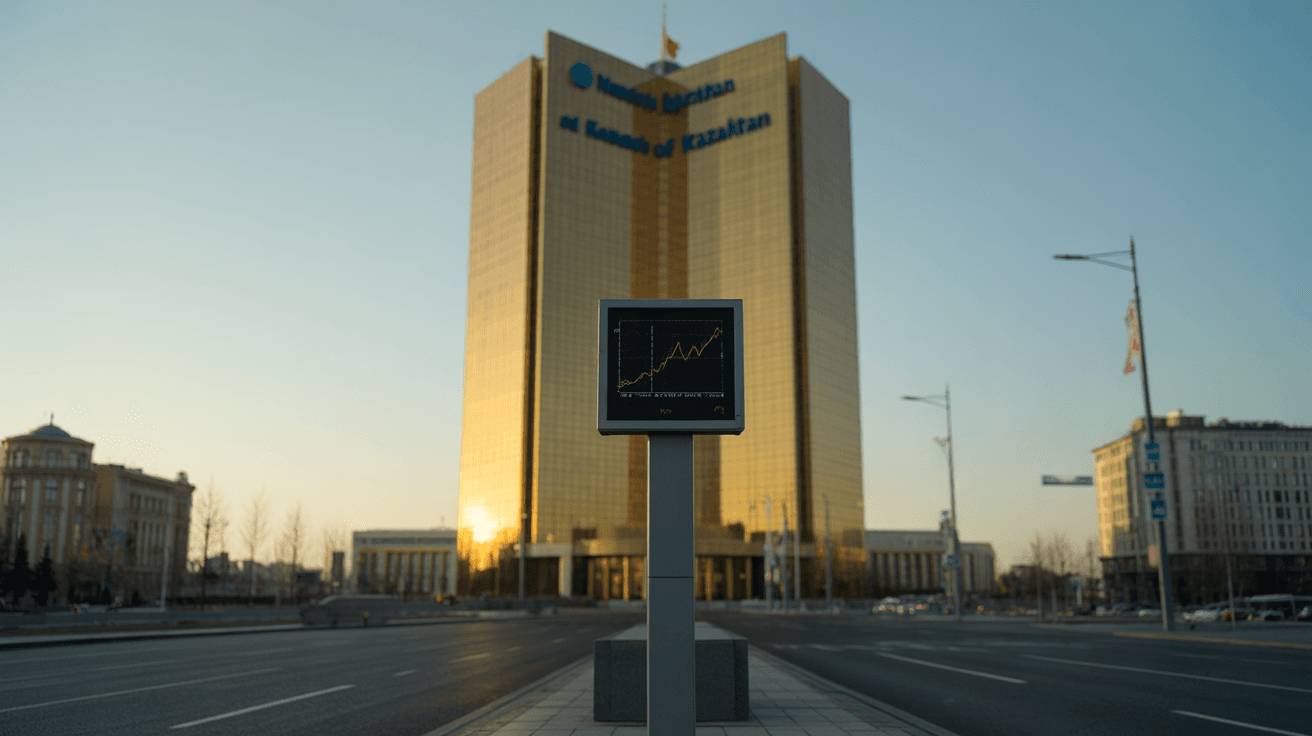
The National Bank of Kazakhstan (NBK) is taking one of the most significant steps any central bank has made towards the crypto sector. According to Bitcoinist, the bank plans to allocate up to $350 million – approximately 3.7 billion Norwegian kroner – from the country's gold and foreign exchange reserves for investments with exposure to digital assets.
The launch date is set for April or May 2026, the bank states.
It is important to emphasize that this does not involve direct purchases of volatile cryptocurrencies like Bitcoin. According to NBK Deputy Chairman Aliya Moldabekova, the fund will instead target companies operating within crypto infrastructure, as well as index funds tracking crypto-related markets. Central Bank Governor Timur Suleimenov describes the measure as part of a broader technological transformation of financial markets.
We are not talking about a large investment in cryptocurrencies. We are in the process of selecting companies that work with digital assets – for example, those involved in crypto infrastructure.

Modest Share of a Large Reserve Fund
To put the sum in perspective: Kazakhstan's total gold and foreign exchange reserves amount to an estimated $69.4 billion as of February 2026. The planned crypto allocation thus constitutes less than 0.5 percent of the total reserves – an approach similar to the caution shown by many other institutional players.
Commentators point out that the strategy could also serve as insurance against potential reserve freezes, similar to what Russia experienced in 2022. By placing parts of its reserves in liquid, globally traded crypto instruments and associated companies, Kazakhstan reduces its vulnerability to geopolitically motivated financial restrictions.
Seized Crypto Assets Could Bolster the Fund
An unusual detail in the strategy is that Kazakhstan is considering adding crypto assets seized by the police in connection with investigations into illegal activities to the fund. Authorities have already shut down 130 illegal crypto exchanges with a total turnover of approximately $124 million and have seized crypto assets worth over $5 million.
Additionally, the country is working to establish a licensing framework for crypto exchanges, with requirements for compliance with anti-money laundering rules, tax regulations, and other financial oversight. The goal is to position Kazakhstan as a regional hub for digital financial innovation.
A Global Shift Among Sovereign Wealth Funds
Kazakhstan is far from alone in this shift. According to available research, an increasing number of sovereign wealth funds and central banks are moving towards crypto-related investments, albeit cautiously.
Norway's Government Pension Fund Global – the world's largest sovereign wealth fund with assets under management exceeding $1.7 trillion – has significantly increased its indirect Bitcoin exposure in recent years. This occurs through equity stakes in companies such as Coinbase, MicroStrategy, Block Inc., and Marathon Digital, with Bitcoin-related assets not exceeding approximately 0.04 percent of the fund's total portfolio.
From the Middle East, Abu Dhabi's Mubadala Investment Company has invested $436.9 million in the iShares Bitcoin Trust ETF, while the Wisconsin State Investment Board in the USA is among the first state funds to directly enter Bitcoin spot ETFs. Luxembourg was once the first Eurozone country to invest state funds directly in Bitcoin through a national generation fund.
Risks and Caveats
There is reason to be critical of parts of the available information regarding Kazakhstan's plans. The source basis is currently limited to statements from central bank representatives reported in crypto media. Detailed investment criteria, risk frameworks, and supervisory structures have not been disclosed, and the strategy has not yet been implemented.
Simultaneously, a parallel process is underway to develop a central bank digital currency, the Digital Tenge. In connection with this process, the IMF has recommended that Kazakhstan more thoroughly investigate the implications for financial stability, including the risk that funds could flow out of commercial banks and into a central bank-issued digital currency.
Kazakhstan's crypto ambition is, in any case, a symptom of a broader trend: State actors no longer view digital assets as a purely speculative phenomenon, but as a structural part of the global financial market – and they are adjusting their reserves accordingly.