TL;DR
- Morgan Stanley applied on February 18, 2026, for a national bank charter with the OCC to establish «Morgan Stanley Digital Trust, National Association»
- The new entity will offer crypto custody, staking, and trading for institutional clients
- The application comes shortly after Amy Oldenburg was hired as Head of Digital Asset Strategy in January 2026
- The application stands out as one of the most explicit attempts by a traditional major bank to establish a dedicated digital asset entity
Morgan Stanley Enters Crypto Custody with Dedicated Charter
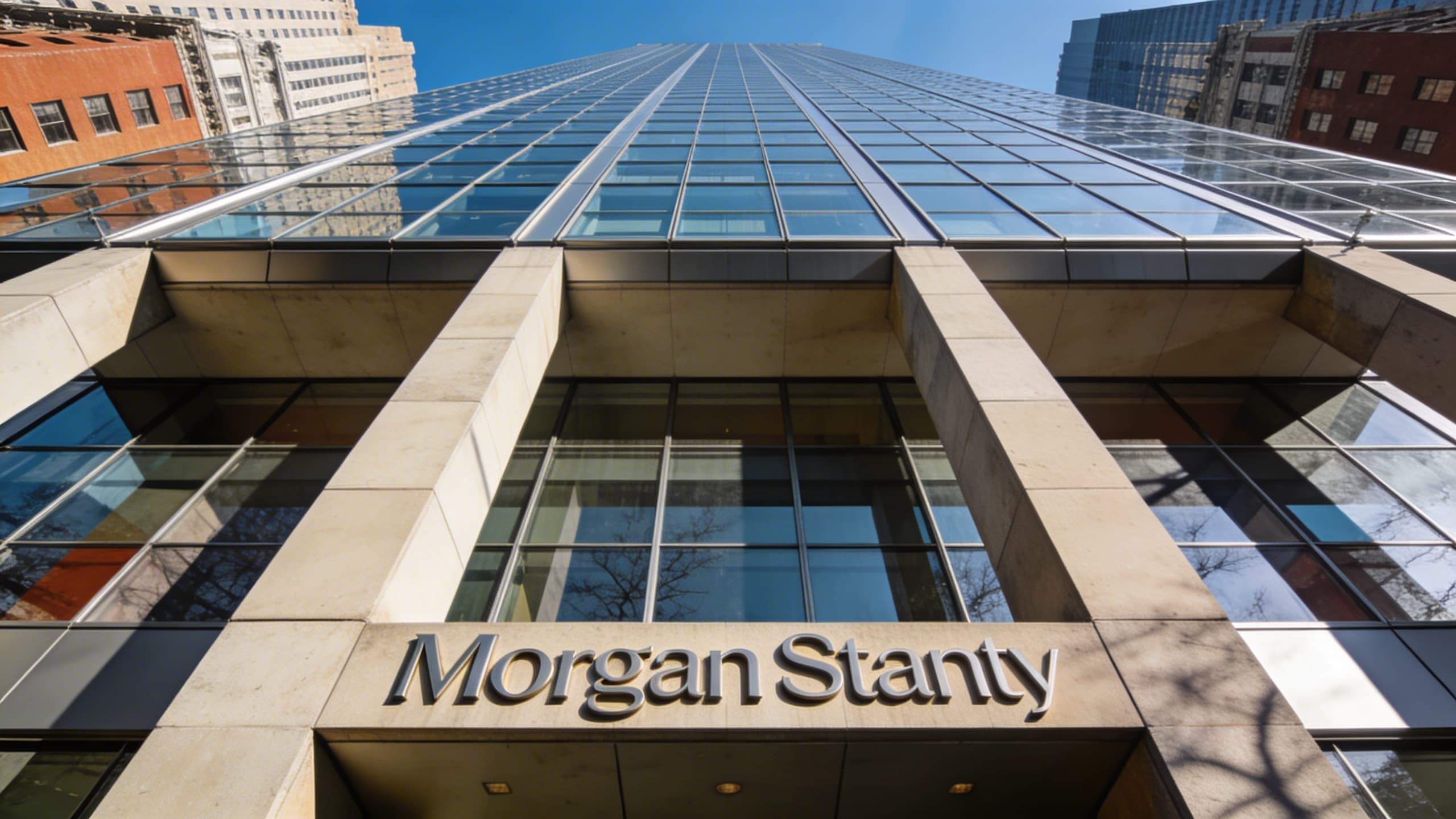
Morgan Stanley took a significant step into the crypto market on February 18, 2026, when the company submitted an application to the U.S. financial regulator Office of the Comptroller of the Currency (OCC) to establish a national trust bank entity under the name «Morgan Stanley Digital Trust, National Association», according to Bitcoinist.
The planned entity will have three core tasks: digital asset custody, facilitating staking, and executing trading on behalf of investment clients. The fact that the application is for an entirely new and dedicated charter — not an extension of existing licenses — underscores the seriousness of the initiative.

New Digital Head and Prior ETF Applications
The bank charter application is not a sudden turning point, but rather the clearest expression yet of a strategic shift that has been ongoing for some time. In January 2026, Morgan Stanley hired Amy Oldenburg as Head of Digital Asset Strategy — a role that, according to Bitcoinist, quickly led to concrete actions.
The company has also submitted applications for exchange-traded funds (ETFs) based on Bitcoin, Ether, and Solana. Together, this paints a picture of an institution positioning itself broadly across the entire digital asset value chain, from trading and products to direct custody.

Competition Among Major Banks Intensifies
Morgan Stanley's application is noteworthy, but the financial sector as a whole has long been moving in this area. According to available research, BNY Mellon is already active with its Digital Asset Custody Platform, which allows institutional clients to hold and transfer cryptocurrency alongside traditional assets. Citibank has reportedly partnered with blockchain companies for custody and tokenization, while State Street and Wells Fargo also offer related services.
JPMorgan Chase operates the Kinexys platform (formerly Onyx) and JPM Coin for real-time settlements, and Goldman Sachs targets institutional investors with Bitcoin futures and options. U.S. Bank offers crypto custody for institutional clients in collaboration with NYDIG.
It is nevertheless worth noting that the OCC has, in the same period, granted conditional approvals to crypto-native companies such as Ripple, BitGo, Fidelity Digital Assets, Paxos, and Crypto.com — indicating that the regulator is open to competition from various types of players, not just traditional banks.
What Does This Mean for the Market?
If the OCC approves the application, Morgan Stanley will be able to offer regulated crypto services directly to its institutional client base without going through third parties. This is a significant operational difference from distributing crypto products through other entities' infrastructure.
It is important to emphasize, however, that the application has not been approved as of today, and the OCC has not communicated any timeline for its processing. Regulatory processes of this type can take a long time, and there is no guarantee that the charter will be granted as applied.
At the same time, the application sends a clear signal to competitors: the race for institutional crypto infrastructure in the U.S. is in full swing, and traditional financial institutions are no longer passive spectators.