TL;DR
- The OCC has published a 376-page regulatory proposal for the implementation of the GENIUS Act, adopted in 2025
- The proposal contains broad definitions designed to close loopholes where stablecoin issuers use third parties or affiliates to pay out yield
- The GENIUS Act explicitly prohibits stablecoin issuers from offering interest or yield to holders
- The debate is heated: the banking lobby wants a total ban, the crypto industry warns of capital flight
OCC Addresses GENIUS Act Implementation
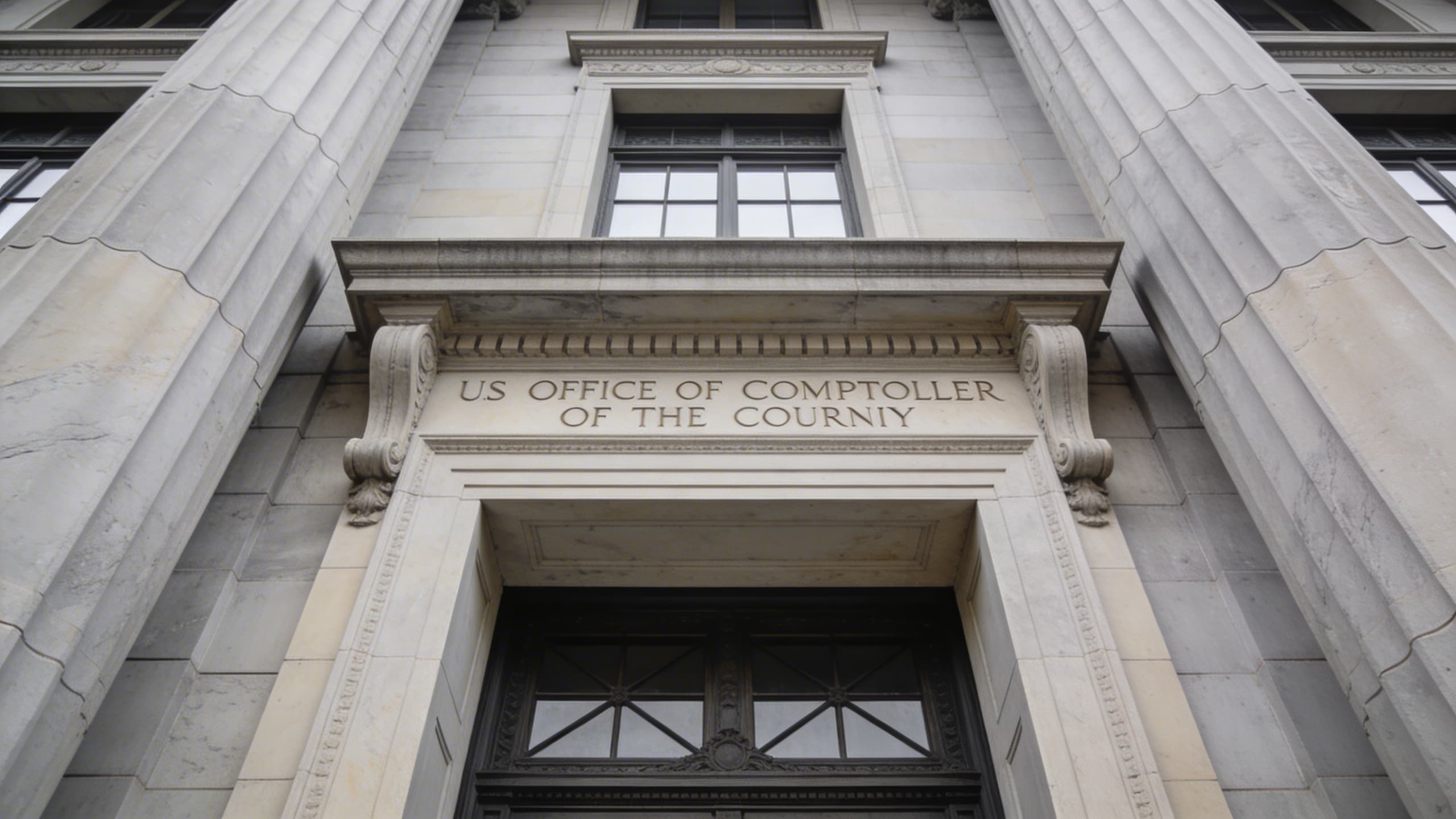
The U.S. banking regulator, the Office of the Comptroller of the Currency (OCC), has requested public input on its proposed regulations for implementing the GENIUS Act – the first comprehensive federal stablecoin law in the U.S., adopted in July 2025. The 376-page proposal seeks, among other things, to precisely define what constitutes "interest payment" and to close potential loopholes in the law's prohibition on yield for stablecoins, according to Bitcoinist.
The GENIUS Act – which stands for "Guiding and Establishing National Innovation for U.S. Stablecoins" – establishes a framework under which the OCC and other federal regulatory authorities will oversee payment stablecoins. A key provision is that stablecoin issuers cannot offer any form of interest or yield to holders of the coin.

The Loopholes to Be Closed
The OCC's regulatory proposal uses a deliberately broad definition of what it means to "pay interest." The definition is designed to also capture arrangements where stablecoin issuers use affiliated companies or third parties to pay out yield on behalf of the issuer – even if the issuer itself does not directly pay the interest.
As a concrete example, the source material points out that the proposal will target schemes where Paxos issues PayPal's PYUSD stablecoin, and PayPal then pays rewards to PYUSD holders. This is precisely the type of structure the OCC aims to prevent.
If regulated stablecoins cannot offer yield, capital will simply move offshore or into synthetic structures outside the regulatory perimeter.
Capital and Licensing Requirements
The proposal also includes requirements that newly established stablecoin issuers must have a minimum capital of $5 million. Additionally, requirements for capital adequacy, liquidity, and risk management will be developed to ensure stable value and protect financial stability.
Only stablecoin issuers approved by the OCC – so-called "permitted payment stablecoin issuers" – will fall within the new framework. These will also not be classified as securities under SEC regulation or commodities under the Commodity Exchange Act.
The Banking Lobby vs. The Crypto Industry
The debate over stablecoin yield has created a sharp divide between the banking lobby and the crypto industry. Banking organizations, including the Independent Community Bankers of America (ICBA), warn that yield-paying stablecoins could trigger massive capital flight from traditional banks. According to an ICBA study, allowing yield on stablecoin holdings would reduce local bank lending by $850 billion due to a $1.3 trillion reduction in deposits.
Banking groups, according to the source material, have proposed a total ban on "any form of financial or non-financial compensation" to stablecoin holders, and penalties of $500,000 per day for violations, enforced by the SEC, Treasury, and CFTC, are being discussed.
The crypto industry, for its part, warns that a strict ban will drive capital out of U.S. regulated structures. Colin Butler of Mega Matrix is quoted as saying that a ban would force capital either offshore or into synthetic structures outside the regulatory perimeter, and that, in the extreme, it could strengthen renminbi-based digital currencies at the expense of the dollar.
Possible Compromise on the Horizon
The White House's crypto advisor, Patrick Witt, has reportedly advocated for a compromise, suggesting that stablecoin issuers could be allowed to offer rewards linked to "activities or transactions" – but not to passive holdings. This signals that the administration may be seeking a middle ground that satisfies both the banking sector's concerns and the crypto industry's desire for innovation.
The OCC's regulatory proposal is now open for public comment. The outcome will likely set the precedents for the entire U.S. stablecoin market – and potentially influence global capital allocation between regulated and unregulated yield instruments.